
Select an image or table to view it at full size in a new tab.
In the previous article, we explained the changes in the ISO22002 series of standards, which you can view at:
Given that the FSSC scheme consists of 3 mandatory components, namely: ISO22000 standard requirements, prerequisite programs (ISO22002), and additional FSSC requirements, it was logical to expect changes in the FSSC22000 standard as well. The FSSC Foundation began developing the new Version 7 during the last quarter of 2025, and the publication of the new version of the standard is expected in May 2026. As usual, the transition period will be 12 months.
What is currently officially known regarding the updates in Version 7:
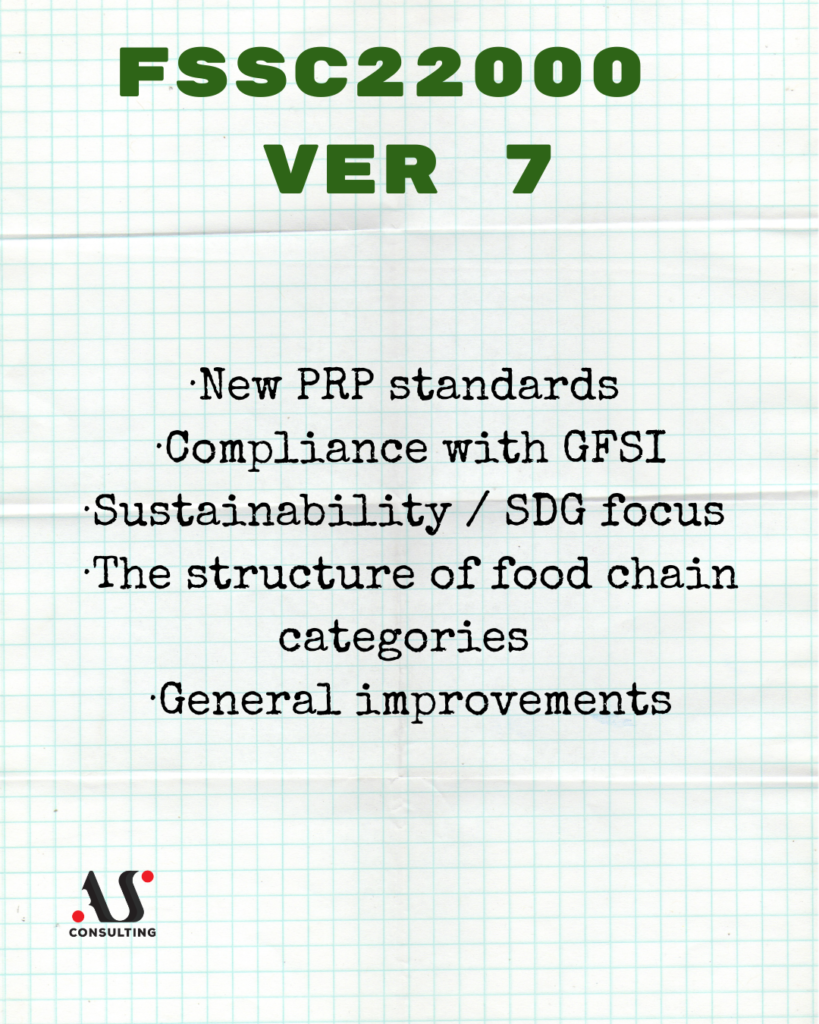
• New PRP standards (transition from ISO/TS 22002-x → ISO 22002-x:2025 series)
• Alignment with GFSI (new GFSI Benchmarking Requirements 2024)
• Sustainability / SDG focus (stronger connection with Sustainable Development Goals (SDGs))
• Food chain category structure (clearer sector categorization is expected)
• General improvements (editorial + technical improvements (readability, applicability))
Recommendations for transitioning to Version 7:
- Given that the ISO 22002-x:2025 series is already in use, it is necessary to align your FSMS with the requirements, which are significantly more detailed compared to the previous version.
- Considering that there are already requirements in ISO22000 related to:
• Environmental impact: The standard encourages the reduction of carbon footprint by optimizing energy consumption during food processing and distribution.
• Waste management: The implementation of FSMS helps minimize waste and promotes efficient use of resources.
• Climate change adaptation: Recent amendments emphasize assessing how climate change affects food production, water quality, and supply chain stability
it is necessary to review the extent to which the company is already aligned with these requirements; - Train employees
- Identify gaps in the system and implement them
If you need assistance with implementing new requirements, reviewing the current status and gaps, and training employees, you can contact our Agency!!!!!